Varen er på fjernlager, leveringstiden er 6-8 hverdager. Mere info
Frakt 75,00 - Bring - Hentes på Posten.
Se alle alternativer
Bring - Hentes på Posten
75,00
Bring - Fleksibel hjemlevering - Levering til døren (om kvelden i større byer)
224,00
NOK
270,00
eksklusiv MVA 216,00
Totalt inkl. frakt
345,00
Denne funksjonen krever at man er logget inn. Opprett en bruker og liste systemet for å holde styr på fremtidige kjøp eller ønskelister. Opprett bruker Login
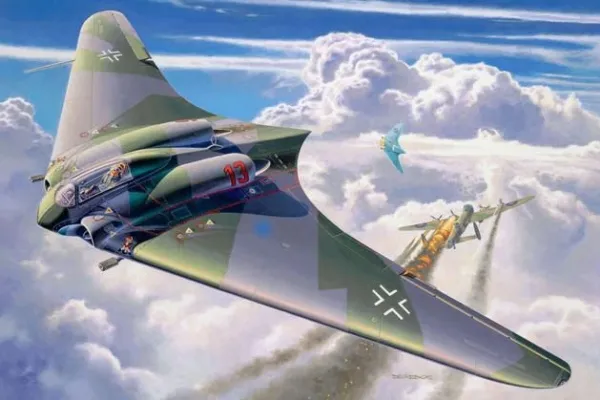
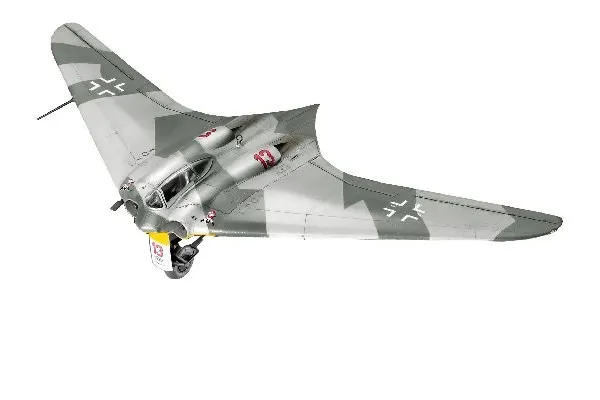
By the end of World War II, the brothers Reimar and Walter Horten were two of the best-known designers of flying wing aircraft in Germany. They brought their experience in this field into a special unit which, as Sonderkommando 9, was responsible for the development of tailless all-wing aircraft. The development of the machine known as the Horten Ho IX, equipped with two BMW 003A-1 jet engines began in 1942. Whereas the first machines could only be made as gliders due to difficulties with the jet engine, the second prototype received a Jumo 004B-1 engine. In 1944 the V2 made its first flight reaching speeds of over 780 km/h. The production of the Horten was transferred to the Gothaer Waggonfabrik and the designation was changed to the Go 229. The first machine from the Gothaer Waggonfabrik, the Go 229 A-O V3 received a Jumo 004-C engine.
Skala
1:72
Kontstruksjonstype
Monteringssett
Modell/Type
Faste vinger
Formål
Militært luftfartøy
Orginalt modell navn
Horten Go 229
Anbefalt alder (min)
10 år
Materiale
Plastikk
Produktfarge
Flerfarget
Anbefalt ferdighetsnivå
Før viderekommende
Anbefalt alder
10+ år
Land verson
Tyskland
Tema
Andre verdenskrig
Antall deler
70 stykker
Vingespenn
23,2 cm
Lengde
10,5 cm
Produktet har følgende varenummer i vårt system:
EAN:
0795864820436
SKU:
REV-04312
Hvorfor oplever jeg at den umiddelbart samme vare findes på forskellige varenumre?
Producenterne udgiver ofte den samme vare med forskellige varenumre, typisk handler det udelukkende om forskellige versioner af emballagen. Eksempelvis kan emballagen være målrettet forskellige lande.
Vi forsøger bedst muligt at samle varerne, men det kan opleves at den samme vare figurerer på forskellige varenumre i vores system.